














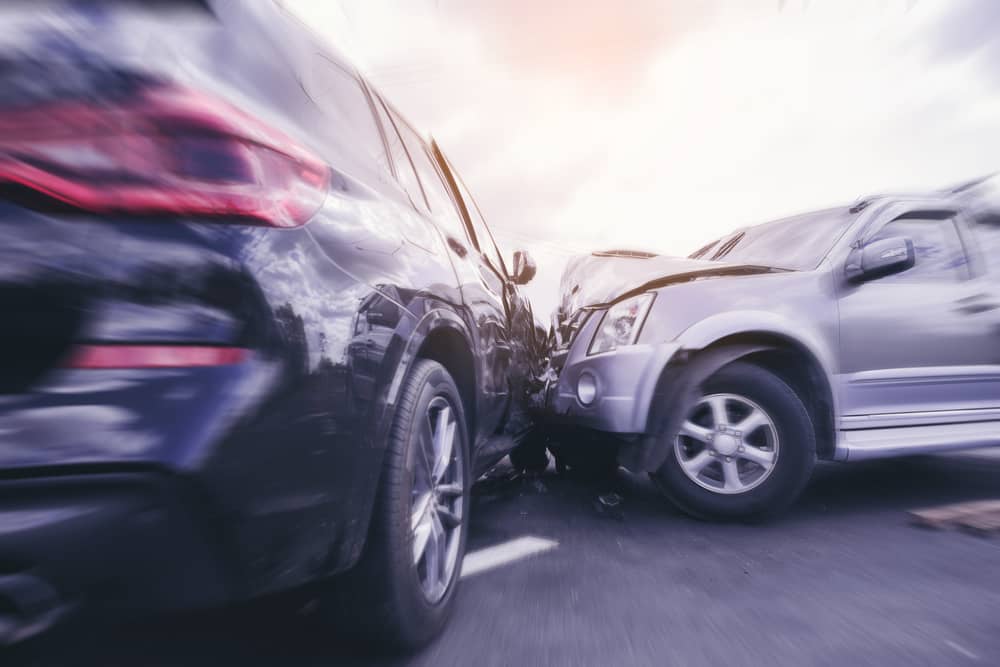
Many car accidents are due, at least in part, to speeding. Speeding in a car is dangerous due to the increased risks it poses to both the driver and other road users. Excessive speed reduces a driver’s ability to react to changing road conditions, increases the severity of crashes, and diminishes the effectiveness of safety measures.
Why Is Speeding So Dangerous?
Here are some reasons why speeding is considered hazardous:
Reduced Reaction Time: Driving at high speeds reduces the driver’s ability to react to unexpected situations. A shorter reaction time can lead to collisions that might have been avoidable at lower speeds.
Increased Stopping Distance: Higher speeds result in longer stopping distances. A speeding vehicle requires more time and distance to come to a complete stop, which can lead to rear-end collisions or inability to avoid obstacles.
Limited Maneuverability: Speeding reduces a driver’s ability to steer effectively and make precise maneuvers. This can result in overcorrections, loss of control, and collisions.
Less Effective Safety Measures: Safety features such as airbags, seatbelts, and crumple zones are designed to work optimally at certain speeds. Speeding can reduce the effectiveness of these measures during a crash.
Increased Impact Force: The force of impact increases exponentially with speed. This means that even a small increase in speed can lead to significantly higher impact forces in a collision, causing more severe injuries and damage.
Risk of Rollovers: Speeding, especially in curves or on slippery surfaces, can increase the risk of a vehicle rolling over. Vehicles with a higher center of gravity, such as SUVs and trucks, are particularly susceptible.
Reduced Visibility: At higher speeds, the driver’s field of vision narrows, and they have less time to perceive and react to hazards, such as pedestrians or obstacles.
Danger to Pedestrians and Cyclists: Speeding reduces a driver’s ability to detect and respond to pedestrians or cyclists, increasing the risk of accidents involving vulnerable road users.
Increased Severity of Injuries: Crashes at higher speeds lead to more severe injuries. The force involved can cause traumatic injuries to occupants and increase the risk of fatalities.
What Injuries Can Result From a High-Speed Crash?
High-speed crashes can result in a wide range of severe and potentially life-threatening injuries due to the significant forces involved in the collision. Some common injuries that can result from high-speed crashes include:
Traumatic Brain Injuries (TBI): High-speed crashes can cause the head to strike the steering wheel, dashboard, or other objects, leading to concussions, contusions, or more severe traumatic brain injuries. These injuries can have long-lasting effects on cognitive and physical function.
Spinal Cord Injuries: The impact of a high-speed crash can lead to vertebral fractures, spinal cord compression, or damage to the spinal cord itself. Spinal cord injuries can result in partial or complete paralysis, affecting motor and sensory functions below the injury site.
Multiple Fractures: The force of impact can cause multiple bone fractures, including fractures of the limbs, ribs, pelvis, and skull. Compound fractures, where bones break through the skin, can also occur.
Internal Organ Injuries: High-speed collisions can cause organs to be compressed against the body’s skeletal structures, leading to internal injuries such as ruptured organs, internal bleeding, and damage to the lungs, liver, spleen, and kidneys.
Chest and Abdominal Injuries: The chest and abdominal regions can be injured by the impact of the steering wheel or seatbelt. Injuries can include broken ribs, punctured lungs, and damage to internal organs.
Whiplash and Neck Injuries: The rapid deceleration that occurs during a high-speed crash can cause the head to jerk violently, leading to whiplash injuries, cervical spine injuries, and muscle strains in the neck.
Facial and Eye Injuries: High-speed impacts can result in facial fractures, lacerations, and injuries to the eyes. Airbag deployment can also cause facial injuries.
Amputations: Severe high-speed collisions can lead to traumatic amputations of limbs or extremities due to the force of impact or crushing injuries.
Burn Injuries: If a high-speed crash results in a vehicle fire, occupants can suffer from burns due to contact with hot surfaces, flames, or chemical reactions.
Psychological Trauma: Beyond physical injuries, high-speed crashes can lead to psychological trauma, including post-traumatic stress disorder (PTSD), anxiety, and depression.
Fatalities: Unfortunately, high-speed crashes have a higher likelihood of resulting in fatalities due to the extreme forces involved and the severity of injuries sustained.
For these reasons, there are speed limits in place. The speed limit on a road is determined through a combination of factors that consider safety, traffic flow, road design, and other considerations. The process of setting speed limits involves transportation authorities and experts who analyze these factors to establish appropriate and safe speed limits for different types of roads.
Speeding Is Negligence. Here Is How We Prove It
When a driver chooses to speed, they break the duty of care every motorist owes to everyone else on the road. That choice is the foundation of a negligence claim. A speeding car accident lawyer builds that case with hard evidence: black box (EDR) data, traffic camera footage, skid mark analysis, witness statements, and the police crash report. Bobby Núñez handles this evidence-gathering personally, because the proof you secure in the first days often decides what your case is worth.
The insurance company is already working to blame you. Under Florida’s modified comparative negligence rule, if they push more than 50% of the fault onto you, your recovery drops to zero. A speeding car accident attorney fights to keep the fault where it belongs: on the driver who was going too fast.
| After a Speeding Crash | With Bobby Núñez | Without a Lawyer |
| Proving the other driver was speeding | EDR data, camera footage and crash reconstruction secured fast | Key evidence overwritten or lost |
| Dealing with the insurance adjuster | We handle every call. You say nothing that hurts your claim | You risk admitting fault on a recorded line |
| Value of the settlement | A proven track record of recovering significant compensation | First lowball offer, often a fraction of true value |
| Cost to you | Free consultation. No fee unless we win | Hours fighting alone while the deadline runs |
You Have Two Years. The Clock Started at the Crash
Florida law gives you only two years from the date of the accident to file a personal injury claim. Evidence disappears, cameras overwrite footage, and witnesses forget. The sooner Bobby Núñez gets to work, the stronger your case. Waiting almost never helps you, and it usually helps the insurance company.
If you’ve been hit by a driver who was going well above the posted speed limit and suffered injuries and property damage as a result, an accident law firm can fight for you to get the financial compensation you deserve.
Frequently Ask Questions
Do I have a case if a speeding driver hit me?
If a driver was exceeding the posted limit or driving too fast for conditions and that caused your crash, you likely have a negligence claim. Bobby Núñez offers a free consultation to review the facts. There is no fee unless we win.
How do you prove the other driver was speeding?
We use the vehicle’s event data recorder, traffic and surveillance camera footage, skid mark and crash reconstruction analysis, witness statements, and the official police report. Acting quickly matters, because much of this evidence can disappear within days.
How long do I have to file a speeding accident claim in Florida?
Florida gives you two years from the date of the accident to file a personal injury claim. Wrongful death claims also carry a two year deadline. Once it passes, you generally lose the right to recover anything, so call as soon as you can.
What if the insurance company says I share the blame?
Insurers often try to shift fault to reduce what they pay. Under Florida’s comparative negligence rule, you can still recover as long as you are not more than 50% at fault. A speeding car accident attorney fights to keep the fault on the driver who sped.
What compensation can I recover after a high speed crash?
You may be able to recover medical bills, lost wages, future care, property damage, and pain and suffering. High speed crashes often cause severe injuries, which can raise the value of a claim. Bobby Núñez has a proven track record of recovering significant compensation.
How much does it cost to hire AccidentLawFirm.com?
Nothing up front. The consultation is free and we work on contingency, which means no fee unless we win your case. You pay us only when we recover money for you.
Hit by a Speeding Driver? Call Bobby Nuñez Today
A high speed crash can change your life in an instant. Bobby Núñez handles your case personally, not a junior associate, and he fights to make the insurance company pay what your injuries are truly worth. The car accident team is ready now, and the consultation is always free.
Our 5-Star Reviews Are No Accident. Call (305) 444-4407 for your free consultation. You pay nothing unless we win. Prefer to write to us? Visit our contact page.
